
Open Enrollment
Open Enrollment 2027: What Changed, What It Costs, and How to Win the Deadline
6 min read · Updated October 8, 2026

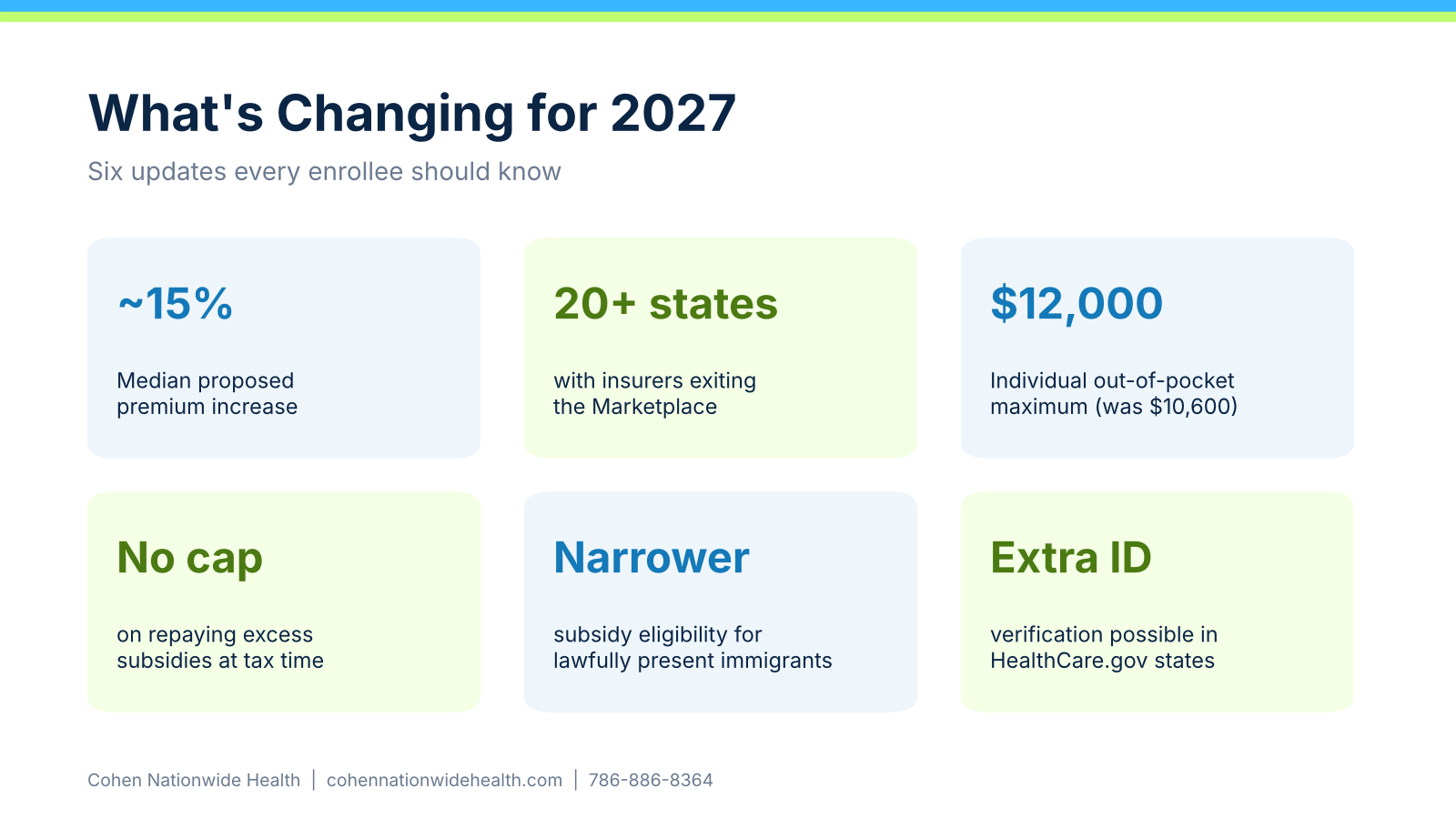
Open Enrollment 2027 is here, and this is not a year to coast. Premiums are climbing, insurers are leaving entire states, the out-of-pocket maximum just jumped, and the rules for subsidies and tax-time repayment have tightened.
The good news: every one of these changes is manageable when you know what is coming. This guide breaks down exactly what is different for 2027, what it means for your wallet, and the moves that will protect you and your family before the deadline hits.
The Dates That Matter
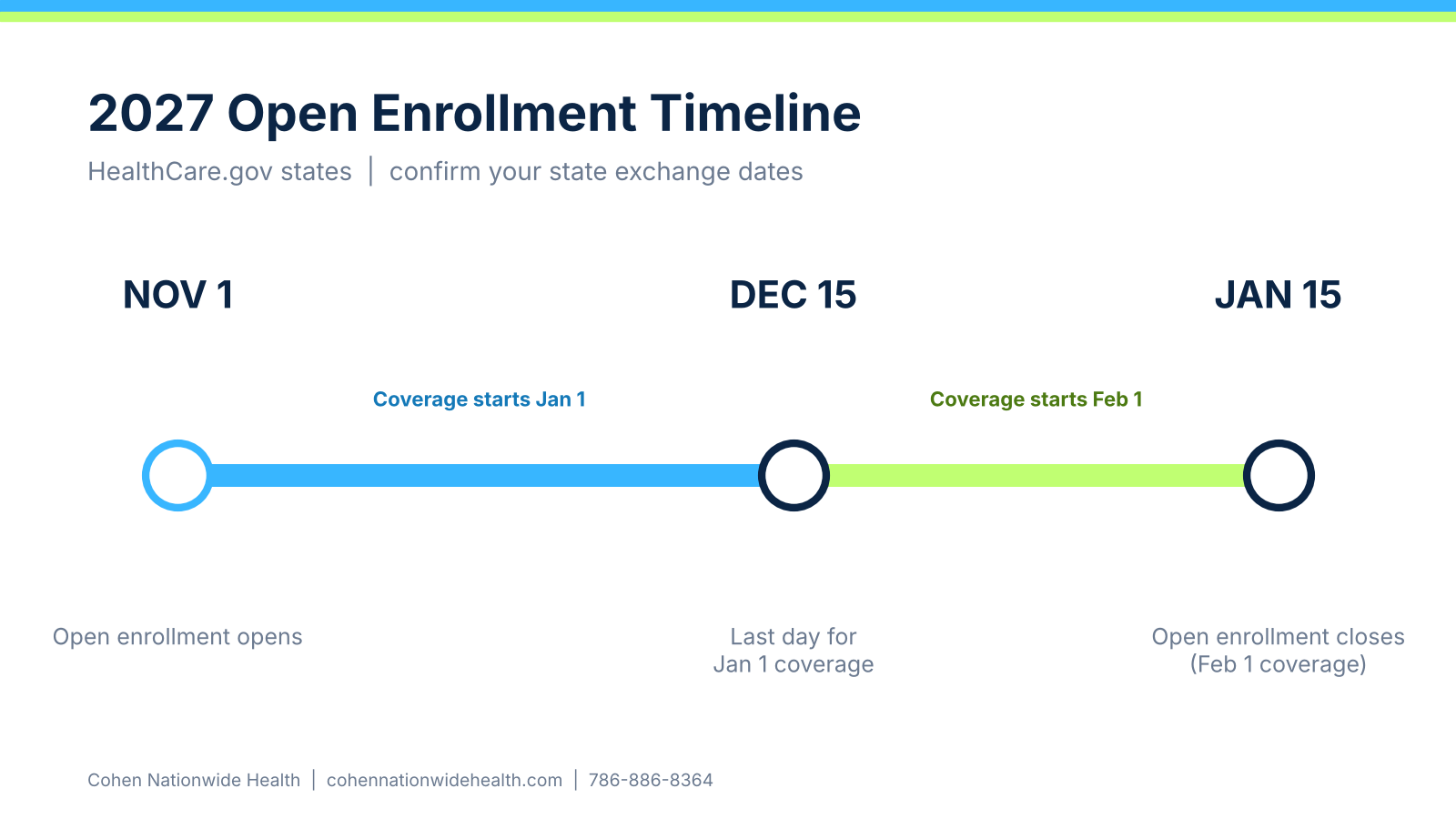
On HealthCare.gov, Open Enrollment for 2027 coverage runs from November 1, 2026 through January 15, 2027.
The date most people miss is the one in the middle. If you want your new plan active on January 1, you need to enroll by December 15. Enroll between December 16 and January 15, and your coverage starts February 1, leaving a one-month gap if your current plan ends December 31.
A 2025 federal rule would have cut this window short and ended enrollment on December 15 for everyone. A federal court vacated that rule in June 2026, and CMS confirmed in August that HealthCare.gov states keep the traditional November 1 to January 15 schedule. The government has appealed, so we will keep you updated if anything shifts.
Your State Might Run on a Different Clock
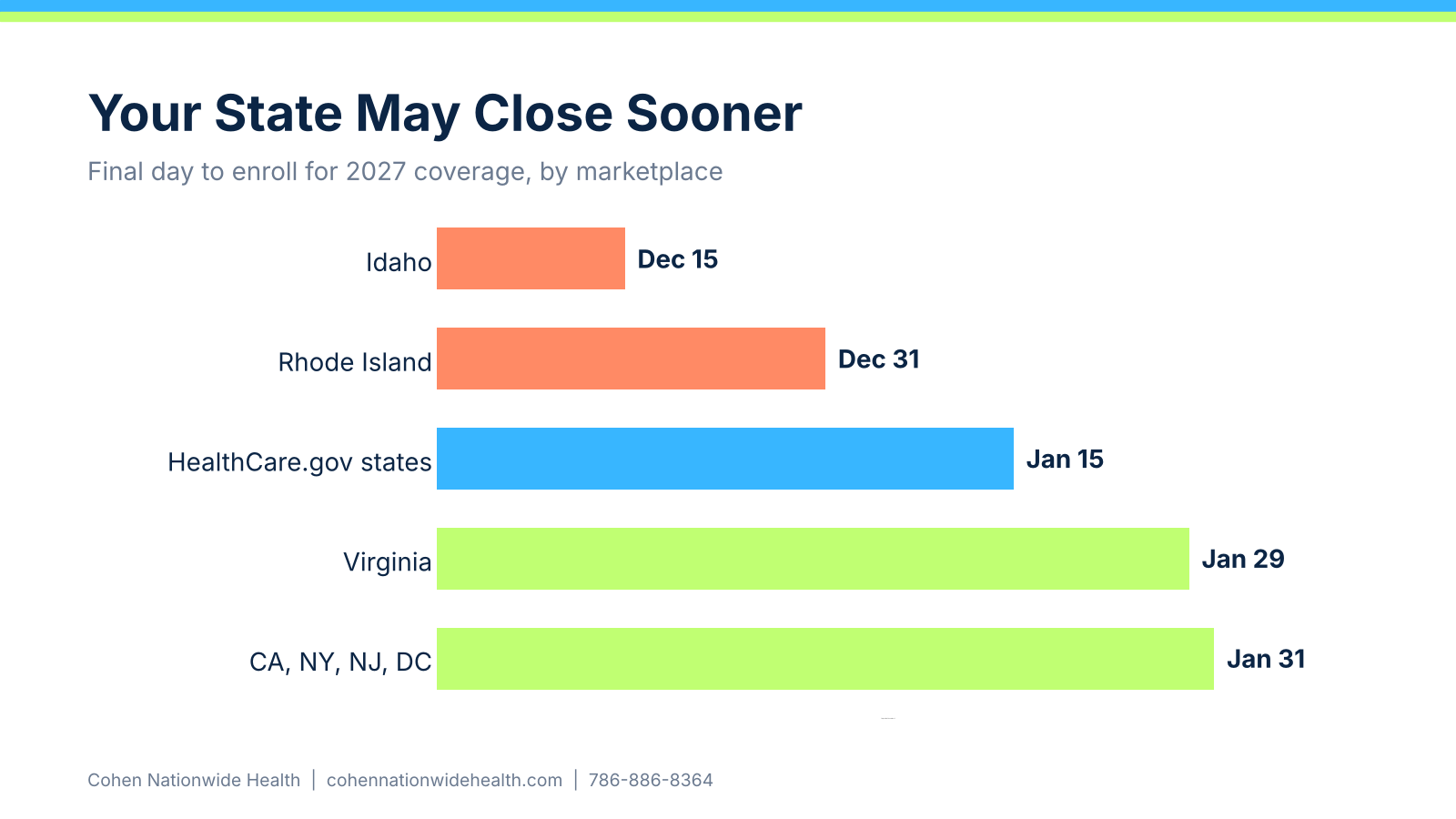
If your state runs its own marketplace, your deadline could be earlier or later than January 15. Here is how some of the state exchanges compare:
- Idaho: closes December 15
- Rhode Island: closes December 31
- Virginia: closes January 29
- California, New York, New Jersey and D.C.: close January 31
- Oregon: moves from HealthCare.gov to its own state platform for 2027
Dates have shifted more than once this year, so confirm your state's deadline before you plan around it. Not sure which marketplace you are on? We can tell you in a two-minute call.

Premiums Are Going Up Again
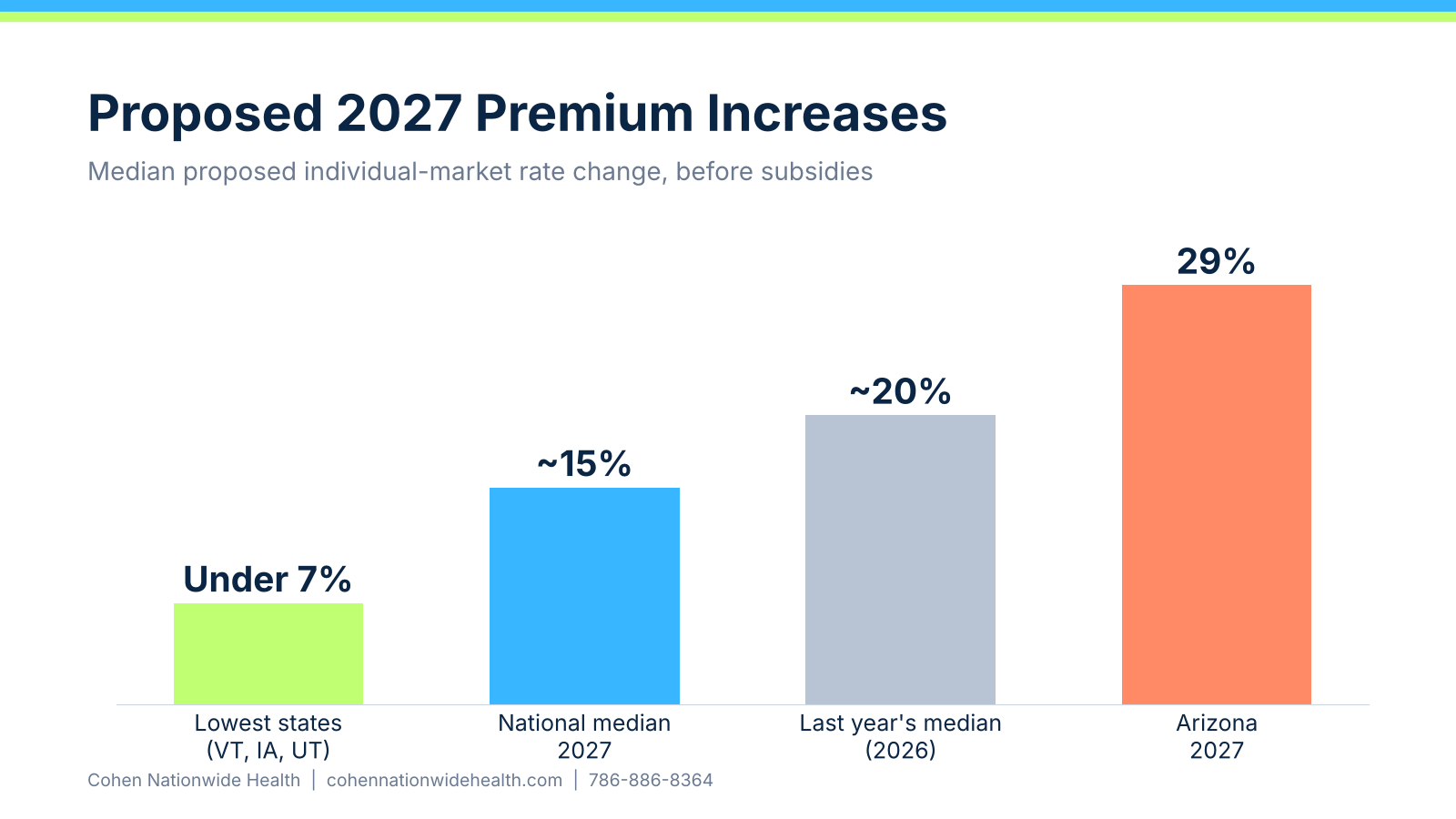
Insurers proposed a median rate increase of about 15% for 2027 individual-market plans. That is lower than last year's roughly 20% jump, but it stacks on top of it.
The range is wide. Vermont, Iowa and Utah saw proposed increases under 7%, while Arizona carriers proposed an average increase of 29%. Your actual price depends on your state, your age, your plan and your carrier.
Who feels it most? People who pay full price. If you buy coverage off the exchange or earn too much to qualify for a subsidy, you absorb the entire increase.

Subsidies: Still Here, With Less Cushion
The enhanced premium tax credits that kept many plans affordable expired at the end of 2025, and nothing has been signed to bring them back. That means the original ACA subsidy rules are back in force, including the income cliff at four times the federal poverty level. Above that line, you get no premium tax credit at all.
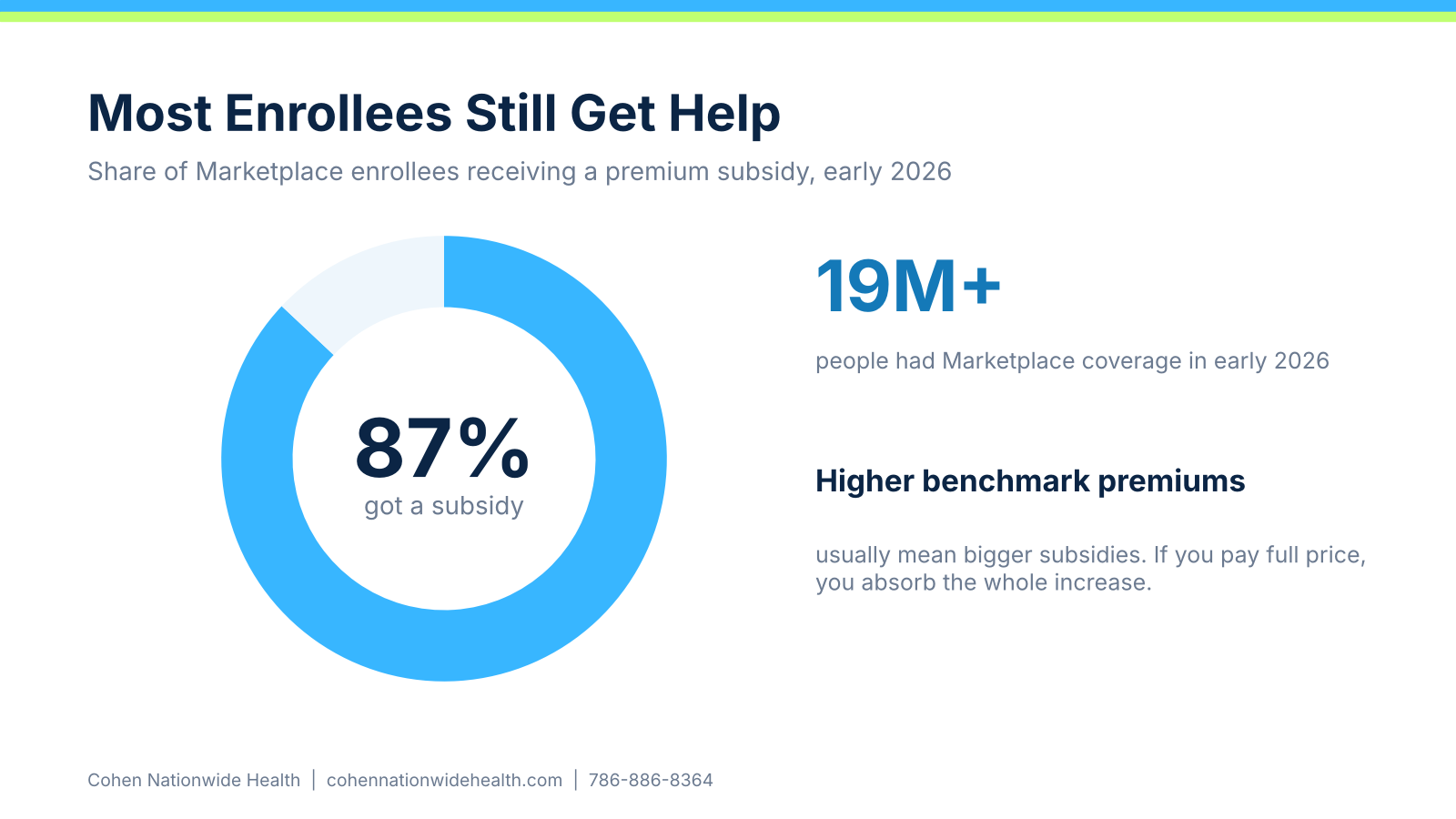
Still, most enrollees continue to get help. At the start of 2026, 87% of Marketplace enrollees received a premium subsidy. Because subsidies are tied to the cost of the benchmark silver plan, rising premiums usually mean bigger subsidies for people who qualify.
Two states are stepping in with their own help. Virginia launches a state-funded subsidy on November 1 for households between 138% and 250% of the poverty level. Rhode Island set aside $19 million to partly replace the expired federal enhancements.
The Tax-Time Surprise Nobody Talks About
This is the change that can hurt the most, and most people have never heard of it.
Starting with tax year 2026, the caps on repaying excess subsidies are gone. If you underestimate your income and receive more subsidy than you qualify for, you now owe back the full difference when you file taxes. In the past, many households had that repayment capped.
How to protect yourself:
- Build your 2027 income estimate carefully, including side income, bonuses and freelance work.
- Report raises, new jobs and household changes to the marketplace as they happen.
- When in doubt, estimate slightly high rather than low.

Your Worst-Case Cost Just Went Up
The out-of-pocket maximum, the most you can pay for covered in-network care in a year, rises to $12,000 for an individual and $24,000 for a family in 2027. In 2026 those limits were $10,600 and $21,200.
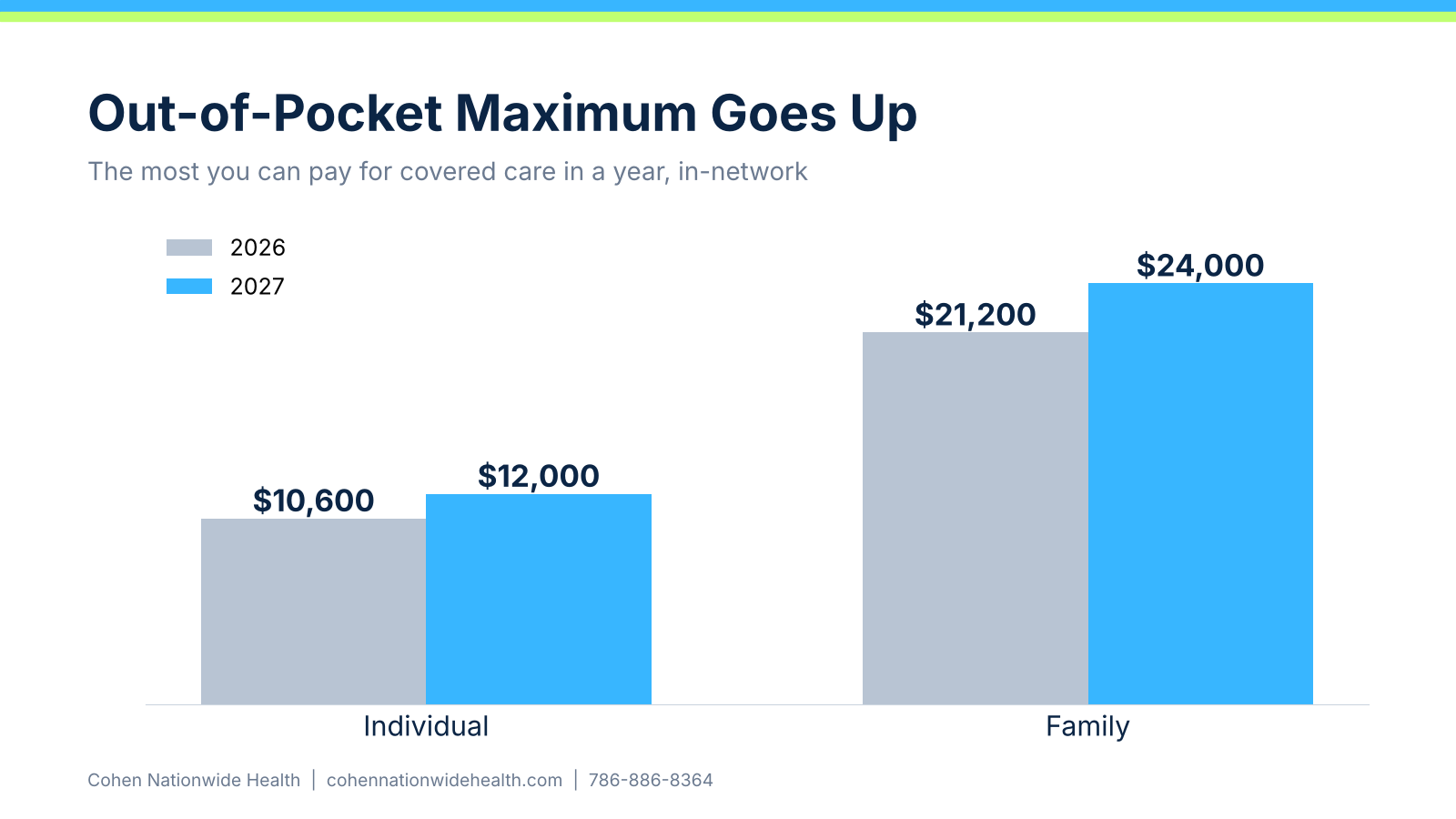
These are federal ceilings. Many plans set their limits lower, which is exactly why comparing the out-of-pocket maximum matters as much as comparing the premium.
Insurers Are Leaving. Do Not Let Auto-Renewal Decide for You
Carriers are exiting the Marketplace in more than 20 states for 2027, with far more exits than new entries. Hundreds of thousands of people have plans ending December 31 because their insurer is leaving.
On the positive side, California, Colorado, Georgia, Indiana, Minnesota, Ohio and Texas each gain one new carrier.
If your plan is discontinued, the marketplace may auto-enroll you in a replacement. That replacement can come with a different network, a different drug list and a different price. Your doctor may not be in it. Your prescription may not be covered the same way.
Two more things to know:
- Automatic re-enrollment still works for 2027 but is scheduled to end for 2028.
- If you qualify for cost-sharing reductions but are enrolled in a bronze plan, you will no longer be moved to silver automatically. You need to switch yourself to get those savings.

Good News for HSA Savers
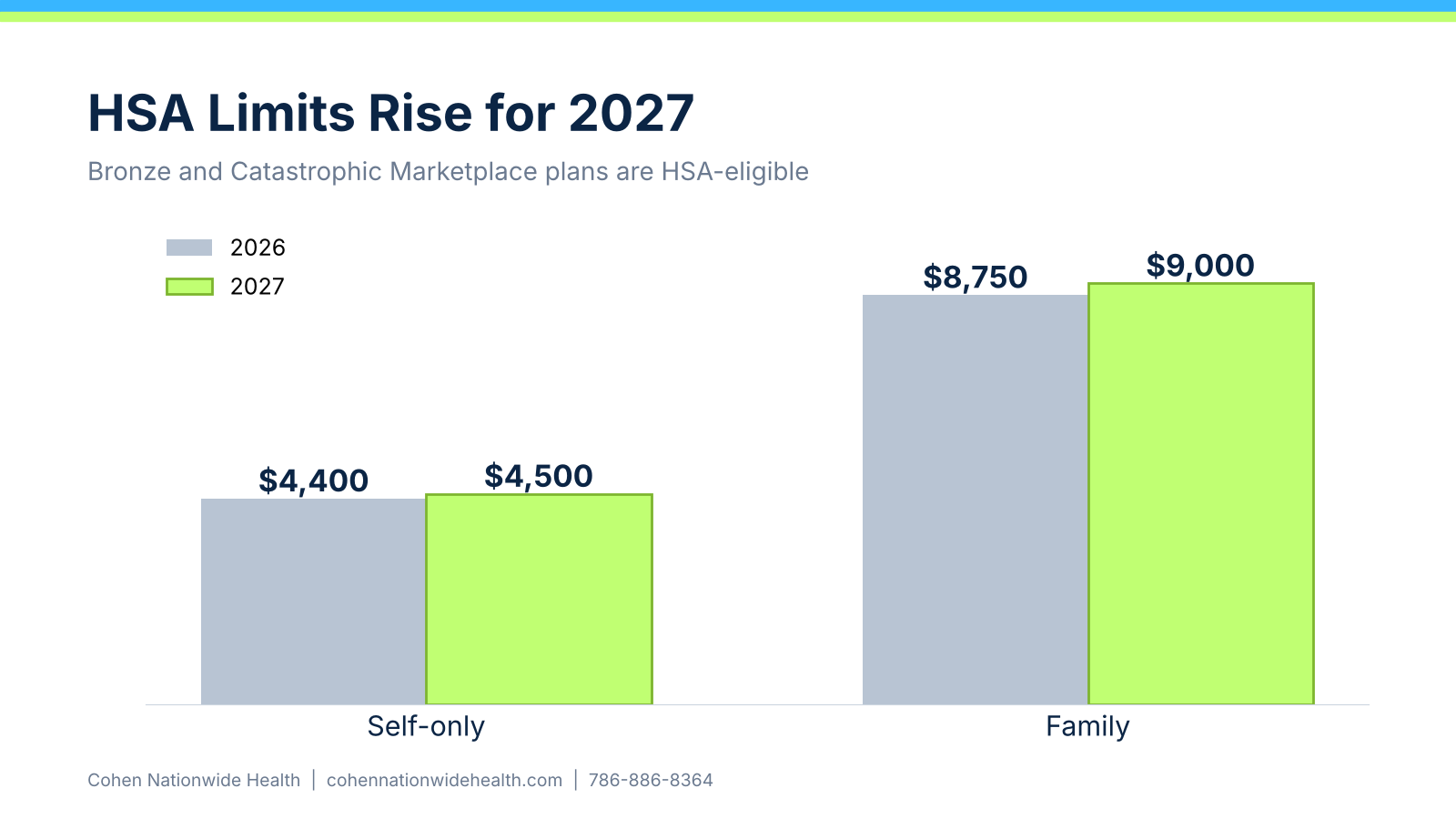
Every Marketplace Bronze and Catastrophic plan is HSA-eligible in 2027. That opens a powerful tax advantage to a lot more people: contributions are tax-deductible, growth is tax-free, and withdrawals for qualified medical expenses are tax-free.
The 2027 contribution limits rise to $4,500 for self-only coverage and $9,000 for family coverage, and you can contribute until the April 2028 tax deadline.
One note on Catastrophic plans: a court paused the expansion that made them widely available. If you are 30 or older, you generally still need a hardship or affordability exemption to buy one.
Other Rule Changes to Watch
- Extra identity verification: If you live in a HealthCare.gov state, you may need to verify your identity before you can enroll. Start early so this does not hold you up.
- Immigrant eligibility: Starting in 2027, federal subsidies are limited to lawful permanent residents, Cuban-Haitian Entrants and Compact of Free Association migrants. Refugees, asylees, TPS holders and people on work or student visas lose subsidy eligibility.
- Special enrollment: The monthly special enrollment period for people under 150% of the poverty level has been repealed. Life events like losing coverage, moving, marriage or a new baby still open a 60-day window year-round.
- Employer coverage: For 2027, a job-based plan counts as affordable if the employee-only premium is at or below 10.22% of household income. If your employer offer meets that test, you do not qualify for Marketplace subsidies.
Marketplace Is Not Your Only Option
For a lot of healthy individuals, families, self-employed professionals and early retirees, an ACA plan is not the best fit. Depending on your health, income and doctors, a private PPO plan may offer broad national networks and lower premiums, especially if you earn above the subsidy cliff and would pay full price on the exchange anyway.
The right answer depends on your situation. That is why we compare both sides, Marketplace and private, before we recommend anything.

Your 2027 Open Enrollment Checklist
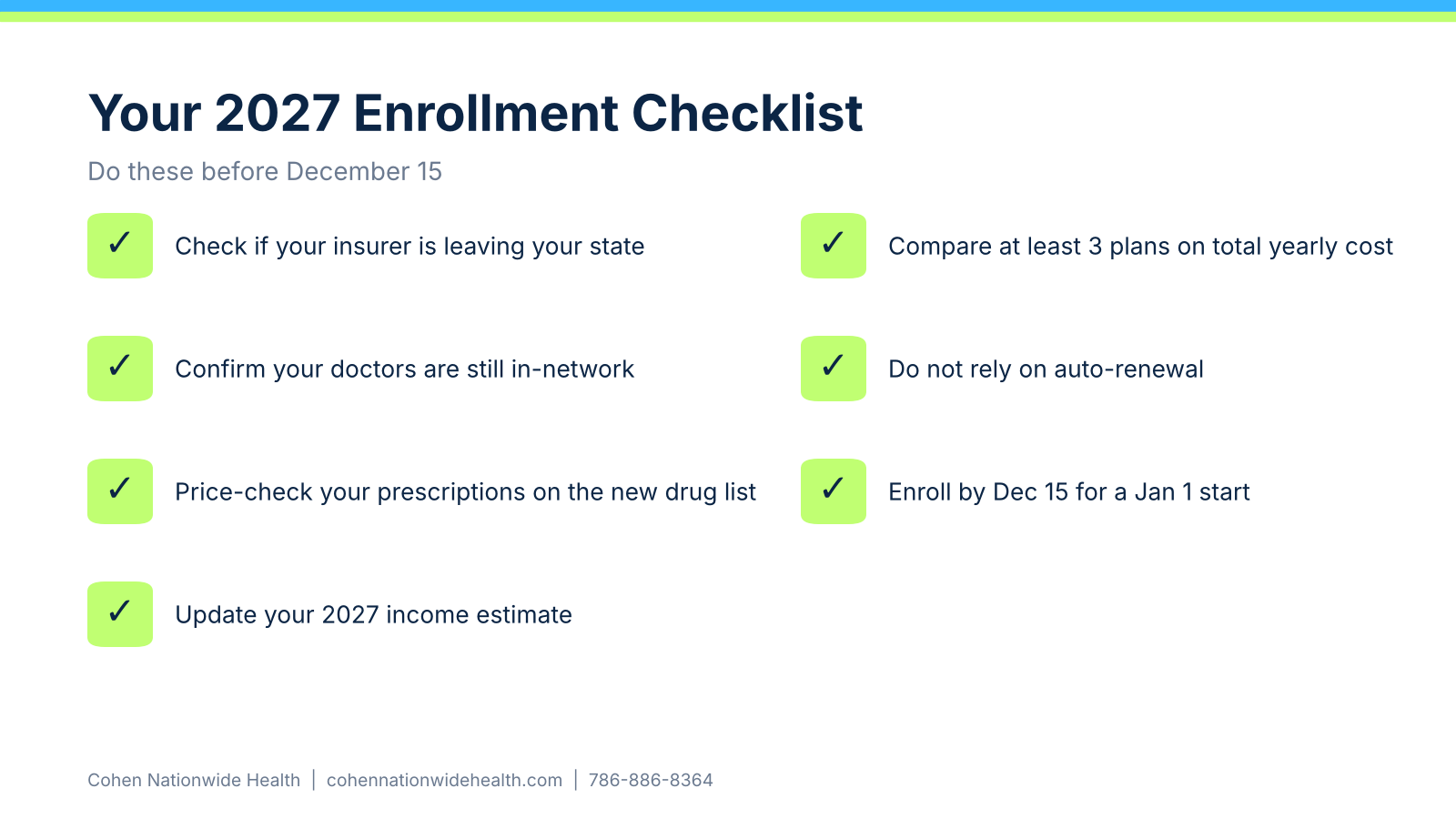
Do these before December 15 and you will walk into 2027 with confidence:
- Check whether your insurer is leaving your state.
- Confirm your doctors and hospitals are still in-network.
- Look up your prescriptions on the new plan's drug list.
- Update your 2027 income estimate carefully.
- Compare at least three plans on total yearly cost: premium, deductible and out-of-pocket maximum.
- Do not rely on auto-renewal.
- Enroll by December 15 for a January 1 start.
Let Us Do the Heavy Lifting
Open Enrollment 2027 rewards people who act early and compare carefully. You do not have to sort through it alone.
Cohen Nationwide Health is a licensed health insurance advisory firm with agents licensed in more than 30 states and a 5.0-star Google rating from more than 100 reviews. We compare Marketplace and private plans side by side, check your doctors and prescriptions, and help you lock in the right coverage before the deadline.
Call 786-886-8364 or request your free quote at cohennationwidehealth.com. Let's get your 2027 coverage handled before December 15.
This article is for general educational purposes and reflects information available as of October 2026. Rates, deadlines and rules can change and vary by state. Contact a licensed advisor for guidance specific to your situation.
Want this compared against your actual numbers?
Get a Free Consultation